

Heater Maintenance Checklist: What’s Included for Optimal Performance and Safety
Regular heater maintenance is a focused set of inspections, cleaning, tests, and minor adjustments that keep a heating system running efficiently, safely, and reliably through seasonal use. This guide explains what a complete heater maintenance checklist includes, why each item matters for energy savings and occupant safety, and which tasks are safe for homeowners to perform versus those that require a trained HVAC technician. Many homeowners want clear, actionable steps to reduce heating bills and avoid emergency repairs, so this article maps DIY tasks, professional tune-up items, system-specific checklists, timing recommendations, and local service options. You will find prioritized maintenance steps, comparison tables that show what to expect for gas furnaces, electric furnaces, heat pumps, and boilers, and a transparent description of what professional providers typically do during a tune-up. After explaining core maintenance concepts and warning signs, the article outlines when to schedule service and how AC Experts (operating as First Choice AC and Heating Inc.) structures professional heating maintenance in the Palm Desert area, including promotion and scheduling guidance.
Why Is Regular Heater Maintenance Essential?
Regular heater maintenance is the routine work that preserves system efficiency, reduces the risk of failure, and protects occupants from safety hazards, delivering measurable benefits in energy use and equipment lifespan. When a system receives scheduled care—filter changes, calibrated controls, cleaned combustion components—less energy is wasted and wear on components decreases, which lowers monthly bills and delays replacement. Maintenance also reduces safety risks by detecting gas leaks, cracked heat exchangers, and electrical faults before they become emergencies, thereby protecting indoor air quality and occupants. Understanding these core benefits sets up the specifics of how maintenance improves efficiency and which safety tests technicians perform during a tune-up.
How Does Heater Maintenance Improve Energy Efficiency and System Lifespan?
Heater maintenance improves efficiency by ensuring airflow is unrestricted, combustion is optimized, and control systems are calibrated, which together reduce energy input for the same heat output. Clean filters and ductwork reduce blower energy consumption while properly adjusted burners and correct gas pressure maximize combustion efficiency in gas systems. Over time, this reduced strain means motors, heat exchangers, and controls experience less wear, extending the useful life of the equipment and lowering total lifecycle costs. Recognizing these mechanisms makes it clear why regular maintenance is an investment rather than an expense, and it leads to an examination of the specific safety risks that maintenance helps prevent.
What Safety Risks Does Preventative Heater Care Help Avoid?
Preventative heater care targets the main safety hazards associated with heating systems: carbon monoxide exposure, gas leaks, electrical shorts, and blocked vents that can cause backdrafting or fire risk. Routine inspections include carbon monoxide testing, gas-line leak checks, vent and flue integrity assessments, and verification of safety controls; these steps detect conditions that could otherwise result in poisoning or structural damage. Technicians also inspect heat exchangers for cracks and verify that limit switches and flame sensors operate correctly to prevent unsafe operation. With safety risks identified and mitigated through these tasks, homeowners can maintain comfort and indoor air quality, which sets the stage for a clear checklist of homeowner and technician tasks.
What Are the Key Tasks in a Comprehensive Heater Maintenance Checklist?
A comprehensive heater maintenance checklist separates safe homeowner tasks from professional technician tasks, organizes frequency recommendations, and explains each task’s purpose so you can prioritize actions that deliver the most value. Homeowners can manage simple, high-impact items like air filter changes, thermostat checks, and vent clearing on a monthly or seasonal cadence, while trained HVAC technicians should handle combustion analysis, heat exchanger inspection, and electrical testing annually. Presented below are clear lists of DIY and professional tasks followed by a structured EAV table that summarizes who should do what and how often.
Maintaining this separation between DIY and pro tasks reduces risk and ensures critical safety and performance checks are not overlooked.
Which homeowner-performed tasks are the highest-impact, and when should they be done? The next subsection outlines safe, actionable DIY steps.
Which DIY Maintenance Steps Can Homeowners Perform?
Homeowners can perform several maintenance tasks safely to keep a heater running well between professional visits. Primary actions include replacing or cleaning air filters monthly to quarterly depending on use, verifying thermostat settings and battery levels, clearing supply and return vents of obstructions, and doing a visual inspection for soot, unusual odors, or water around hydronic equipment. Use simple tools like a vacuum, soft brush, and a screwdriver for access panels, and always turn power off at the breaker before opening any electrical access panel for visual checks only. These straightforward tasks improve airflow and efficiency, and if homeowners observe abnormal signs during DIY checks, they should stop and schedule professional service to avoid compounding a problem.
Before moving to technician tasks, it helps to see a concise list of common homeowner tasks for quick scanning.
- Replace or clean filters monthly to quarterly depending on use and filter type.
- Verify thermostat operation and replace batteries annually if applicable.
- Clear return and supply vents of furniture, curtains, and debris to ensure proper airflow.
- Conduct a basic visual inspection for soot, leaks, or unusual odors and take photos to report to a technician.
These homeowner actions maintain baseline performance; the next list explains technician-level tune-up tasks that address deeper mechanical and safety concerns.
What Professional Heating Service Tasks Are Included in a Tune-Up?
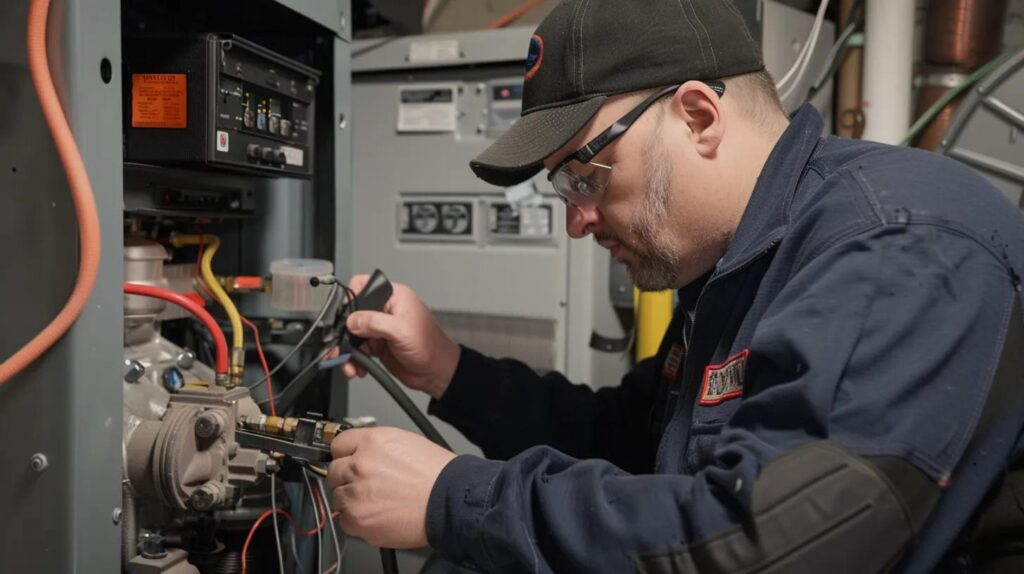
A professional heating tune-up includes diagnostic and repair-grade tasks that require instruments and certified knowledge to perform correctly and safely. Typical technician tasks include combustion analysis and burner cleaning for gas systems, heat exchanger inspection for cracks, full electrical safety checks with a multimeter, blower motor inspection and lubrication where applicable, and verification of airflow and combustion efficiency. Technicians also test safety controls, perform carbon monoxide measurements, inspect venting and flue paths for blockages, and confirm thermostat calibration against measured temperatures. These procedures correct performance issues, validate safe operation, and produce data—such as combustion readings—that homeowners cannot replicate without specialized tools; these data inform repair recommendations and efficiency improvements.
Technicians employ diagnostic tools and follow safety protocols to execute these tasks; the following two subsections outline how inspections and safety tests are performed.
Technicians use both visual and instrument-based methods to verify component integrity, which the next subsection details.
How Do Technicians Inspect Burners, Heat Exchangers, and Electrical Connections?
Technicians inspect burners visually for even flame pattern, soot, and proper ignition, and they use combustion analyzers to measure oxygen and CO2 levels for efficient combustion. Heat exchangers are checked using visual inspection and sometimes borescopes to detect hairline cracks or corrosion that could cause combustion gases to mix with indoor air. Electrical connections are tested for continuity and secure terminal tightness with a multimeter, and control boards are evaluated for correct voltage and signal response. These inspection steps reveal issues like loose connections that cause intermittent failures, cracked exchangers that risk CO leakage, or dirty burners that reduce efficiency; detecting them guides immediate corrective action.
After describing inspection methods, technicians also perform several safety tests that validate system operation before returning equipment to service.
What Safety Tests Are Performed During a Professional Heating Tune-Up?
Safety tests during a professional tune-up confirm that the system shuts off under fault conditions, that combustion byproducts are vented correctly, and that there is no measurable carbon monoxide escaping into living spaces. Typical checks include carbon monoxide concentration measurements at the heat exchanger and in the flue, gas pressure and leak detection on gas lines, flame rollout and ignition sequence verification, and testing of limit switches and safety interlocks. Acceptable ranges vary by manufacturer and local code, but technicians will document measured values and recommend immediate shutdown and repair if readings exceed safety thresholds. These tests ensure occupant safety and underpin maintenance recommendations, and they naturally lead into how maintenance varies by system type.
The following EAV table summarizes common maintenance tasks with recommended frequency and whether they are DIY or professional responsibilities.
This table helps homeowners and property managers quickly see what to schedule or monitor.
| Task | Recommended Frequency | Who Performs It |
|---|---|---|
| Air filter replacement | Monthly to quarterly | Homeowner |
| Thermostat calibration | Annually or as needed | Homeowner / Technician |
| Combustion analysis | Annually (pre-winter) | Technician |
| Heat exchanger inspection | Annually | Technician |
| Vent and flue inspection | Annually | Technician |
| Blower motor lubrication/inspection | Annually | Technician |
| Visual leak and soot check | Monthly | Homeowner |
This task-frequency breakdown clarifies which actions save energy and which require professional tools or certification, informing a sensible maintenance plan and the timing of service calls.
How Does Heater Maintenance Vary by Heater Type?
Heater maintenance priorities differ by heater architecture: gas furnaces require combustion and flue checks, electric furnaces focus on electrical elements and blower health, heat pumps need refrigerant and reversing-valve attention, and boilers require hydronic system care such as pressure checks and flushing. Each system’s critical components drive specific maintenance steps and warning signs, so successful maintenance plans are tailored to system type to maximize safety and longevity. The following subsections list the essential checks per heater type, followed by a comparative EAV table that highlights critical components and warning signs.
What Is Included in a Gas Furnace Maintenance Checklist?
Gas furnace checklists prioritize combustion safety and airflow: technicians clean and adjust burners, perform combustion analysis, inspect the heat exchanger for cracks, check gas pressure and fittings for leaks, and verify proper flue venting. Homeowners should change filters regularly and visually inspect for soot or smell of gas, and if they observe any of those signs they should shut the system down and call a professional. The technician also tests ignition systems, flame sensors, and safety limit controls to ensure reliable startup and safe operation. Because gas systems involve combustion and potential CO risk, professional inspections are critical at least once a year and whenever unusual behavior occurs.
How Is Electric Furnace Maintenance Different?
Electric furnace maintenance focuses on electrical safety and the condition of heating elements and the blower assembly rather than combustion checks. Technicians inspect heating elements or heat strips for continuity and signs of damage, verify safe electrical connections and breaker sizing, examine the blower motor and belt or direct-drive coupling for wear, and ensure proper airflow by checking filters and ducts. Homeowners should still change filters and confirm vents are clear, but they must avoid opening electrical access panels unless power is isolated and the person is qualified. The absence of combustion simplifies safety concerns but elevates the need for reliable electrical inspection.
What Are the Essential Steps in Heat Pump Maintenance?
Heat pump maintenance covers both heating and cooling season responsibilities because the refrigerant circuit and reversing valve operate year-round; essential steps include cleaning outdoor coils, checking refrigerant charge for leaks, testing defrost controls and reversing valve operation, and verifying proper airflow and filter condition. Technicians measure temperatures and pressures across the system to evaluate performance and look for oil or refrigerant stains that indicate leaks. Homeowners should keep outdoor units clear of debris, trim vegetation, and maintain filters, while professional refrigerant work and compressor diagnosis require certified technicians. Because heat pumps handle both heating and cooling, seasonal tune-ups before each heavy-use period are advisable.
What Should Be Checked in Boiler Maintenance?
Boiler maintenance for hydronic systems emphasizes pressure control, corrosion prevention, and fluid quality: technicians check system pressure and expansion tanks, inspect for leaks at valves and radiators, flush or chemically treat the system if needed, and verify combustion efficiency for gas-fired boilers. Homeowners can monitor visible pipes and radiators for leaks and ensure vents and returns are unobstructed, but boiler flushing, pressure vessel servicing, and valve replacement should be handled by professionals. Proper boiler care prevents water-side corrosion, maintains heat transfer efficiency, and avoids unexpected failures, which segues into recommendations on when to schedule professional maintenance.
To compare priorities, review the following EAV table that pairs heater type with its most critical component and a recommended check or warning sign.
This comparison helps determine which specialist skills and tools are needed for each system.
| Heater Type | Critical Component | Recommended Check / Warning Sign |
|---|---|---|
| Gas furnace | Heat exchanger | Annual inspection for cracks; soot or CO smell |
| Electric furnace | Heating elements / electrical terminals | Continuity testing; burnt smell or tripped breakers |
| Heat pump | Refrigerant circuit / reversing valve | Coil cleaning; abnormal defrost cycles; low efficiency |
| Boiler | Pressure vessel / valves | Pressure checks; leaks; noisy operation |
Understanding these differences helps homeowners prioritize inspections and know when to call a technician with the appropriate expertise.
What Are the Most Common Questions About Heater Maintenance?
This final section addresses top questions homeowners ask, providing concise, actionable answers that summarize recommendations from earlier sections and optimize for quick answers that match people’s search intent. The Q&A format below delivers fast guidance on frequency, tune-up contents, cost-saving impacts, and safe DIY boundaries, with pointers back to the detailed checklist and company service descriptions above.
How Often Should You Have Your Furnace Serviced?
A furnace should receive a professional service once a year, ideally before the heating season begins, while homeowners should perform monthly or quarterly checks on filters and vents to maintain airflow. Units in heavy-use settings or older systems may benefit from semi-annual inspections to catch wear-related issues sooner. Annual professional tune-ups reduce the likelihood of winter breakdowns and keep efficiency near manufacturer specifications, which supports lower operating costs. Regular service history also assists technicians in diagnosing trends and recommending proactive repairs.
What Is Included in a Professional Furnace Tune-Up?
A professional furnace tune-up typically includes filter inspection/replacement, combustion analysis (for gas furnaces), burner cleaning, heat exchanger inspection, blower and motor checks, electrical connection testing, thermostat calibration, vent and flue inspection, and safety control verification. Technicians document findings and recommend repairs if any components fail tests or show unsafe conditions. This suite of tasks ensures both safety and peak performance, and it provides a clear basis for repair or replacement decisions when necessary.
Conclusion
Regular heater maintenance is essential for ensuring optimal performance, safety, and energy efficiency, ultimately leading to lower utility bills and extended equipment lifespan. By understanding the key tasks involved, homeowners can take proactive steps to maintain their heating systems while knowing when to call in professionals for more complex issues. Prioritizing these maintenance actions not only enhances comfort but also safeguards indoor air quality and reduces safety risks. Start implementing these maintenance tips today to enjoy a warm, safe, and efficient home this heating season.